



A Tale of Two Tails: Salamander Monitoring Leads to Fun Discovery
Posted on May 7, 2026
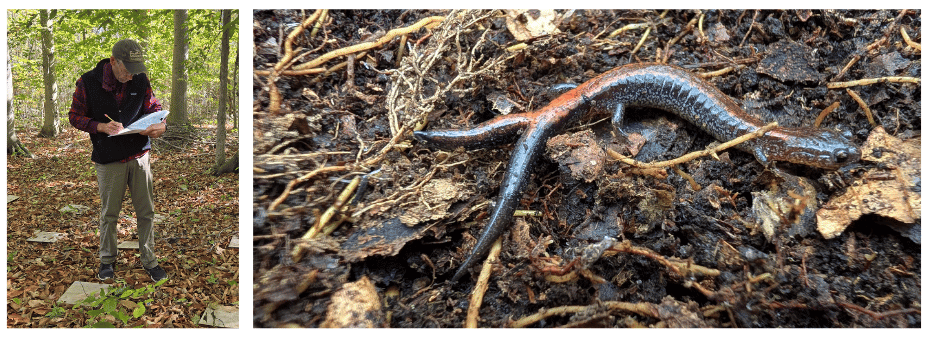
Patience and perseverance recently paid off in a big way for COL Preserve Steward Doug Morris.
Doug, the steward for Jens Jensen Preserve, helped launch COL’s salamander monitoring efforts several years ago at Jens Jensen Preserve. Despite many seasons of careful searching and monitoring, the study plot there produced an unexpected result: no salamanders.
Rather than giving up, the salamander monitoring plot was eventually relocated to Robinson Woods Preserve and that persistence led to an exciting discovery last week: a rare two-tailed salamander.
While two-tailed salamanders are uncommon, the condition is typically caused by an injury during development or regeneration. Redback salamanders sometimes drop their tails to escape danger (a predator); the wound can sometimes trigger a duplication defect causing two tails to grow back instead of one. For Doug, the discovery was a rewarding moment that was well-deserved after years of dedication to monitoring efforts.
Salamander and Vernal Pool Monitoring Efforts
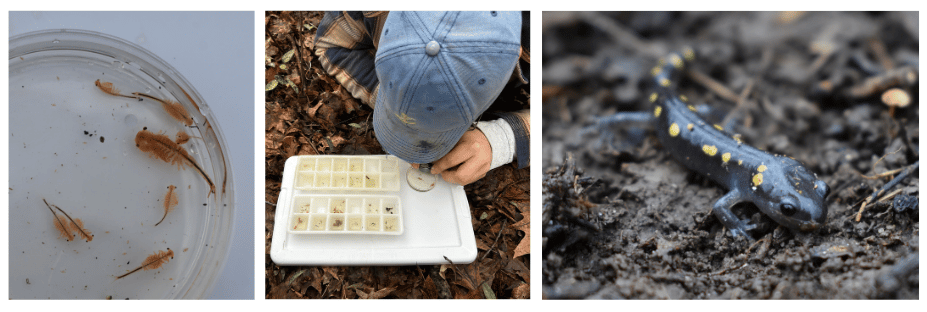
Today, Chikaming Open Lands maintains salamander study plots at Myron Perlman Nature Preserve, Robinson Woods Preserve, and Sugarwood Forest Preserve as part of our ongoing stewardship and ecological monitoring work, with plans to add additional plots this year. These efforts are made possible thanks to the effort of dedicated volunteers like Doug (read his full story in our Winter print newsletter).
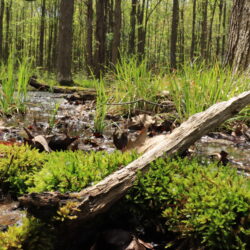
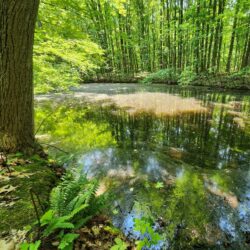
This year, COL also launched vernal pool monitoring at Myron Perlman Nature Preserve. Stewardship Field Supervisor Mandy recently attended specialized training and is now leading this important effort. Vernal pools - seasonal wetlands that fill with water in spring and often dry later in the year - provide critical breeding habitat for amphibians like salamanders and wood frogs, as well as fascinating invertebrates such as fairy shrimp.
Young Explorers
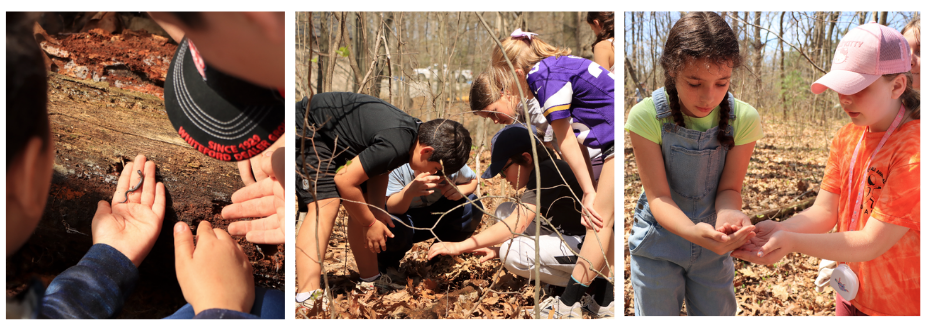
Salamanders have also become a favorite discovery for many students participating in our Mighty Acorns education program this spring. During their time on the preserve, students have been enthusiastically searching for and finding salamanders while learning about the importance of healthy habitats.
From dedicated volunteer stewards to curious young explorers, these discoveries remind us that careful stewardship, long-term monitoring, and hands-on environmental education all play an important role in protecting the natural habitats and landscapes for all beings to thrive.