











The Bugs That Love Bubble Baths
Posted on May 24, 2024
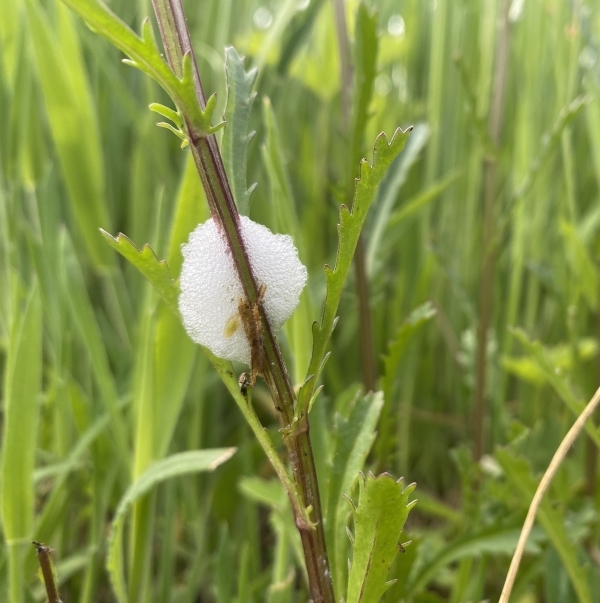
Have you ever been wandering one of our restored prairies or working in your garden and noticed a glob of what looks like froth or spit clinging to the stem of a plant? While easy to overlook, these little dollops of foam actually serve a greater purpose…and house a short-term resident!
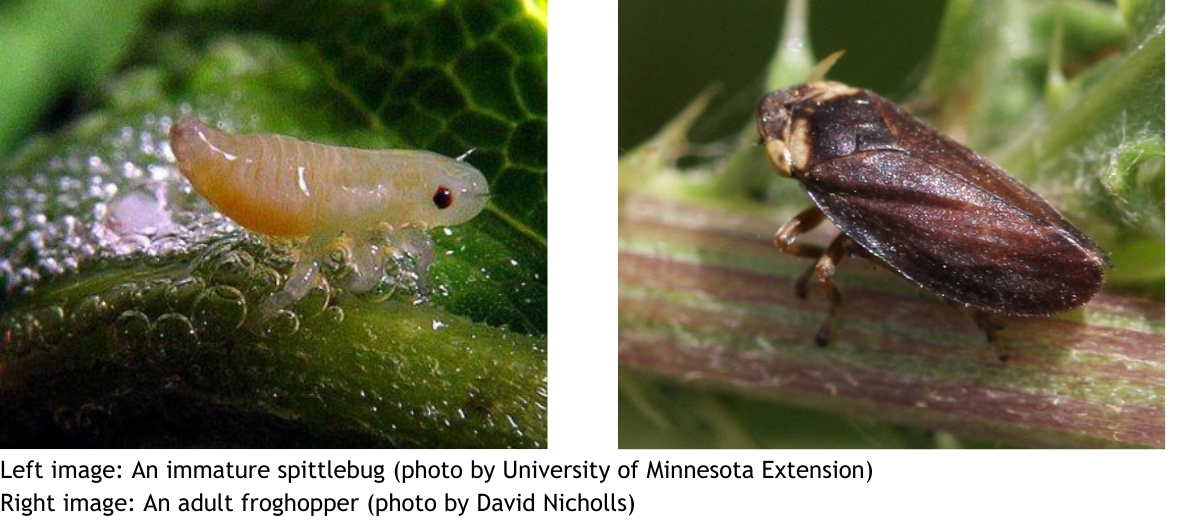
Inside this mass of froth is the aptly named spittlebug, or the nymph version of a froghopper. Froghoppers belong to the family Cercopidae and are relatives of aphids and cicadas. The foam surrounding the young spittlebug serves a dual purpose: it keeps the nymph moist and its bitter taste shields it from predators, like birds, wasps, and spiders. So, what’s the spittlebug doing in there? And how does it produce all that foam? Keep reading! The answer is kind of gross!
What’s going on in there?
Inside the foam, the spittlebug is busily chugging watery plant sap. The sap isn’t especially nutritious, so the bug consumes a lot of it and subsequently excretes a lot of urine (150-280 times its body mass daily). As the bug excretes this large quantity of urine, it emits air from its abdomen at the same time, and…well, we think you know where we’re going with this. That “spit” surrounding the bug isn’t really spit at all…it’s basically foamy urine. Maybe the bugs weren’t so aptly named after all, huh?
Do they stay in there forever?
As the spittlebug feeds and grows, it periodically molts. Upon its final molt, the spittlebug emerges as a mature adult froghopper. Froghoppers are winged insects that prefer to hop…and boy are they good at it! Froghoppers can leap up to 27 inches straight up into the air in a single bound! Like the foamy houses they form early in life, these gigantic leaps help the froghoppers evade their enemies.
Are they harmful?
Generally, spittlebugs do not cause significant plant damage unless there is a large infestation. In certain geographic areas, spittlebugs are considered vectors for plant diseases due to their ability to spread the bacteria Xylella fastidiosa, although this is not currently an issue in Michigan.
There you have it! Keep an eye out for the tell-tale foamy masses next time you're out at one of our preserves with restored prairies (Chris Thompson Memorial Preserve, Burns Prairie, or Sugarwood) or in your garden. The foamy masses can usually be found until about early to mid-summer, so now is prime time!